How to Eat Well When You Work Nights or Long Shifts
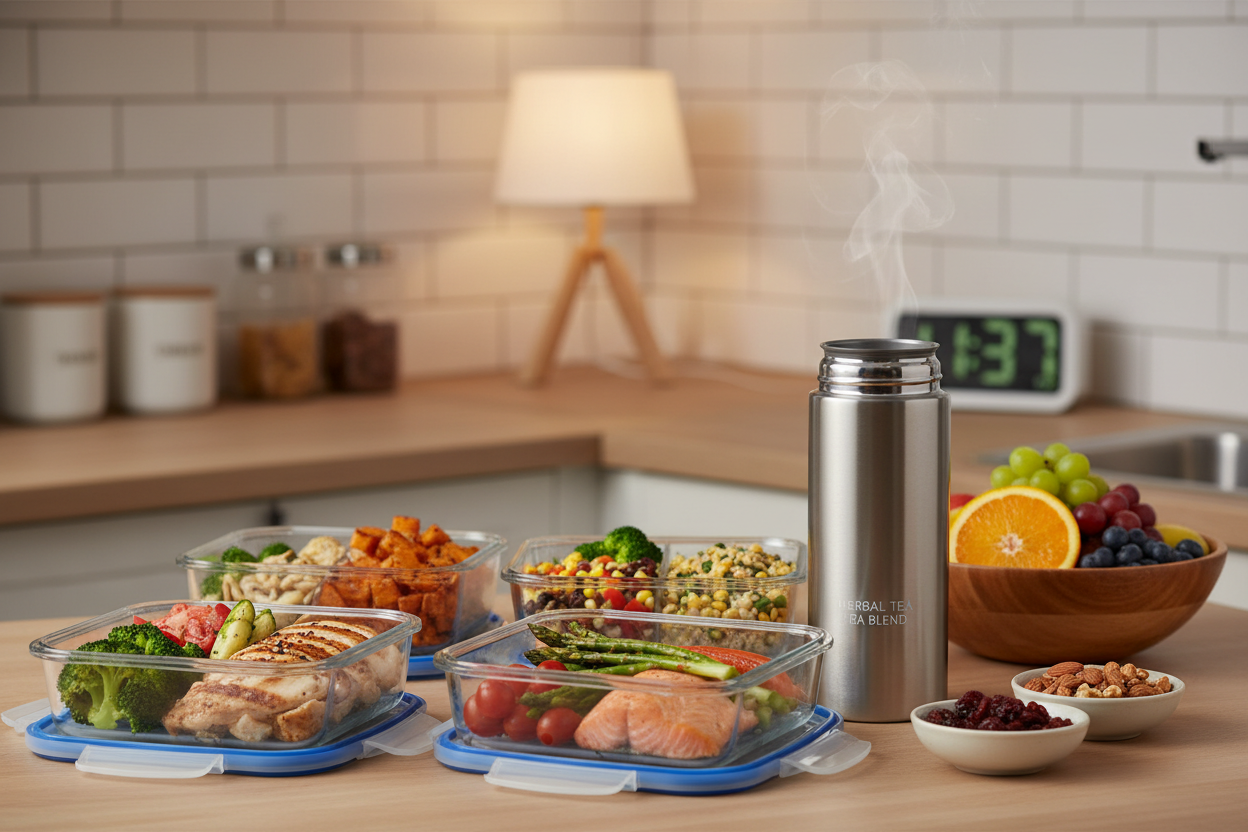
Working nights doesn't just shift your sleep around. It scrambles the whole system your body uses to handle food in the first place. Your metabolism, your hunger signals, your energy, all of it was built around daylight, and at 3 a.m. every one of them is running a little off. That's exactly why the break room at the bottom of a night shift turns into a minefield of vending machines, leftover donuts, and whatever happens to still be open. And the usual nutrition advice doesn't help, because it quietly assumes you eat breakfast, lunch, and dinner in daylight, which is pretty useless to someone whose "lunch" lands at two in the morning.
So here's the version for people who work while the rest of the world is asleep. We'll cover how to time your eating, what to keep on hand, and how to hold your energy steady through the very hours when your body is expecting to shut down.
The core principle: anchor a real meal before your shift, graze smart during it
The pattern that holds up across most shift schedules is honestly pretty simple. Eat a substantial, balanced meal before your shift starts, keep lighter protein-and-fiber snacks going for the middle of the night, and then avoid a heavy meal in the last hours before you sleep. The reason is that your digestion and blood-sugar control are both weaker overnight, so a giant 4 a.m. meal tends to sit poorly and send your energy spiking and then crashing right when you need it most.
So you front-load the real food, graze on protein-forward snacks to stay even through the middle, and keep that pre-sleep window light. Pair all of that with steady hydration and you'll sidestep most of the slumps, plus the vending-machine reflex that quietly wrecks a night. The rest of this is really just how to run that pattern when you're tired and the cafeteria closed hours ago.
Time your meals to the shift, not the clock
The trick is to think of your shift as having its very own meal schedule. Here's a rough framework that works for a lot of night workers:
- Before the shift (your "breakfast"): A solid, balanced meal with protein, fiber, and some complex carbs. This is the one that carries you through, so please don't skip it for a coffee.
- Mid-shift (your "lunch"): A moderate meal, or a couple of substantial snacks built around protein. Keep it lighter than your pre-shift meal so you don't get hit with the post-meal slump at the worst possible hour.
- Late shift (the danger zone): Small protein-and-fiber snacks if you're genuinely hungry. This is where the vending machine wins, so having your own food on hand matters most right here.
- After the shift, before sleep: Keep it light. A heavy meal right before bed makes for worse sleep and worse digestion, and you need that sleep.
The whole point of steady, balanced inputs across the shift is the same one we get into in building meals for steady energy: protein plus fiber plus a little fat keeps your blood sugar level instead of sending it off on a roller coaster.
What to pack so the vending machine loses
The vending machine really only wins by being the one prepared option at 3 a.m. So you beat it by bringing prepared options of your own. Aim for things that hold up fine in a break-room fridge and don't ask you for any real cooking:
- Protein anchors: a reheatable meal with chicken or beef, Greek yogurt, cottage cheese, hard-boiled eggs, tuna pouches, edamame, cheese.
- Fiber and produce: baby carrots, snap peas, apples, berries, whole-grain crackers, a side salad.
- Steady-energy carbs: oats, brown rice, whole-grain wraps, sweet potato.
- Smart snacks: nuts, jerky, a protein bar with a short ingredient list, hummus with veggies.
A pre-portioned heat-and-eat meal is honestly the quiet hero of a night shift, because "lunch" becomes a two-minute microwave job instead of a gamble on whatever's still open. When the prepared, balanced option is sitting right there in the fridge, the donut box loses most of its pull on you.
A sample night-shift eating day
Here's how the whole framework shakes out for someone working roughly 7 p.m. to 7 a.m.:
| When | Meal | Why |
|---|---|---|
| ~5:30 p.m. (pre-shift) | Chicken, rice, and vegetables | A full balanced meal to carry the early hours |
| ~11:30 p.m. (mid-shift) | A lighter reheated meal or a big protein salad | Energy without the heavy post-meal slump |
| ~3:00 a.m. (the dip) | Greek yogurt + nuts, or cheese + an apple | Protein and fiber to ride out the lowest point |
| ~7:30 a.m. (post-shift) | Small snack if hungry, then sleep | Light, so it doesn't wreck your daytime sleep |
The exact times genuinely don't matter much. It's the shape that does: real meal up front, lighter through the middle, small at the end.
Caffeine, sugar, and the 3 a.m. crash
The two classic night-shift traps are leaning on caffeine and leaning on sugar to push through the dip, and both of them backfire on you. Caffeine too late in the shift makes the daytime sleep you desperately need even harder to come by, so try to cut it off several hours before you plan to crash. Sugar gives you a fast lift and then an even faster crash, which is really just the 3 p.m. crash phenomenon relocated to the small hours. The durable fix for that dip is the same in either case: protein and fiber, not another candy bar and another energy drink.
A quick honest note here: shift work and circadian disruption are genuinely hard on the body, and individual needs really do vary. This is general food guidance, not medical advice. If you have specific health concerns, please talk to your doctor.
Who this is for
This one's for nurses, warehouse and logistics crews, security, factory and plant workers, first responders, and frankly anyone whose schedule is at war with their body clock. If you work a rotating schedule, the principles still hold, you just reset the "shift clock" each time you rotate. The constant through all of it is this: bring your own balanced food, anchor a real meal before the shift, and keep the middle steady. That beats whatever's left in the break room every single time.
FAQ
When should night shift workers eat their biggest meal?
Generally before the shift starts, while your body is still better at digesting and regulating blood sugar. Keep your mid-shift meals moderate and your pre-sleep window light. A heavy meal late at night tends to sit poorly and disrupt the daytime sleep you really need.
How do I stop snacking on junk at 3 a.m.?
Bring your own protein-and-fiber snacks and get them into the break-room fridge before the dip hits. The vending machine mostly wins by being the only option around, so taking away that monopoly is most of the battle. Greek yogurt, nuts, cheese, fruit, and a reheatable meal all hold up well.
Does eating at night cause weight gain?
The timing matters less than the total quality and quantity of what you eat, plus how much disrupted sleep is messing with your hunger hormones. Steady, balanced, protein-forward meals and decent hydration help you avoid the overeating that broken sleep tends to drive. Focus on the pattern, not the clock.
How much caffeine is okay on a night shift?
Enough to stay alert early in the shift, but stop several hours before you plan to sleep so it doesn't wreck your rest. Leaning on caffeine to push through those final hours usually costs you more in lost sleep than it ever gives you back in alertness.
The bottom line
Working nights means eating against your body clock, so structure beats willpower here. Anchor a real, balanced meal before your shift, graze on protein and fiber through the middle, keep the pre-sleep window light, and bring your own food so the vending machine never gets a vote. Steady inputs, steady energy.
If you'd rather not assemble shift food at the end of a long week, see what's on this week's menu. Every meal is fully cooked, portioned, and labeled with macros, so your mid-shift "lunch" is just a quick reheat. No subscription required.
Written by the My Healthy Penguin kitchen team. Fresh meal prep made in Rancho Cucamonga, serving Southern California since 2015.
Dinner, already handled.
Fresh, macro-friendly meals delivered across Southern California.