The Weeknight Dinner Problem Every Busy SoCal Family Knows
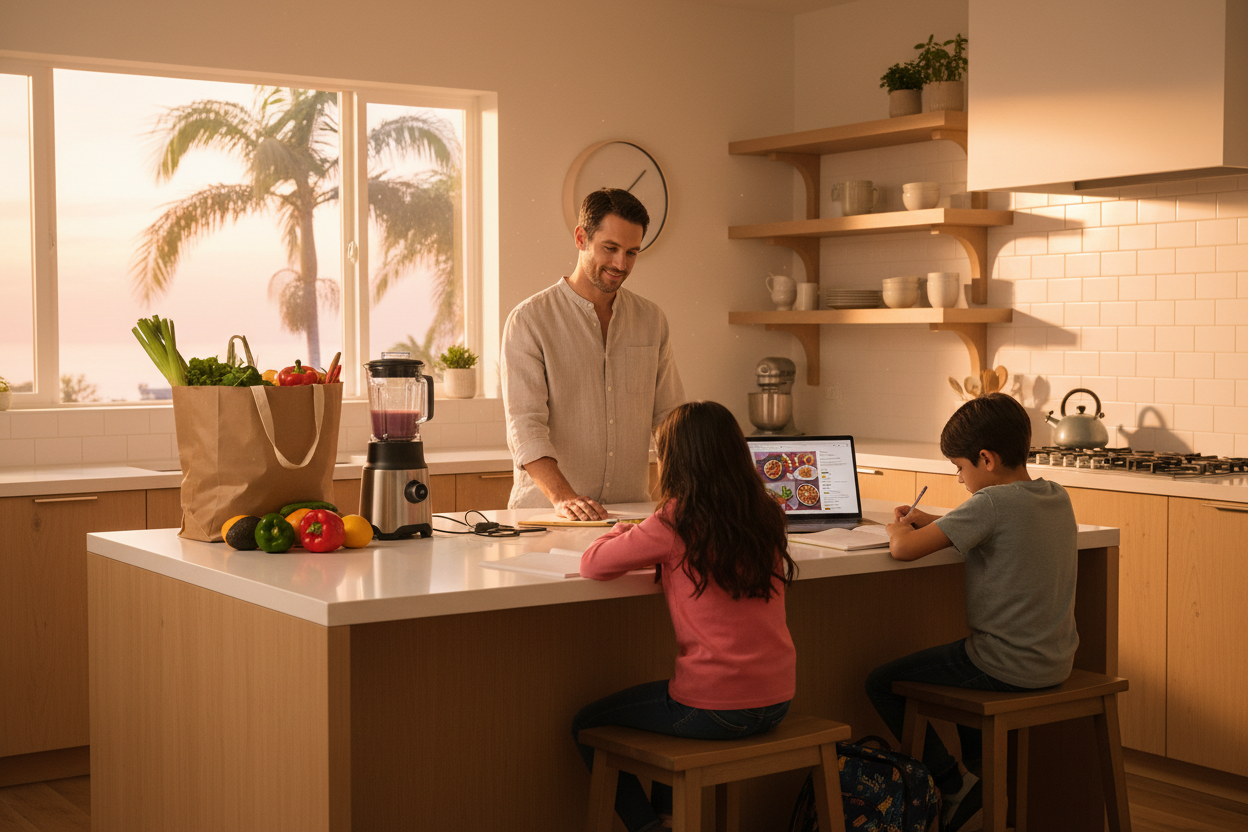
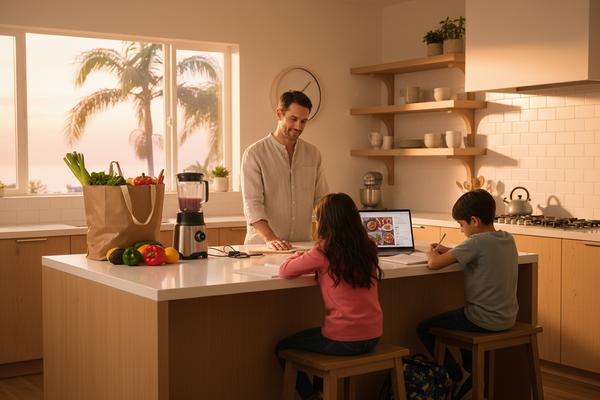
It's 6 p.m. Someone has practice, someone else has homework, you just walked in the door, and the question lands the way it always does: what's for dinner. You've answered it a thousand times by now, and somehow it still catches you flat-footed, because the honest answer most nights is "I have no idea, and I have no energy left to figure it out." Here's what I want you to know, though. That nightly blank you keep drawing isn't a cooking-skill problem. It's a systems problem. And once you start seeing it that way, it gets a whole lot more solvable than it feels at 6 p.m.
So let's walk through the realistic playbook for getting a real dinner on the table on a packed weeknight, without turning yourself into a short-order cook or surrendering to the drive-thru every other night.
Why weeknight dinner is so hard
Dinner tends to fail at the exact same predictable spot for almost every busy family: that gap between getting home and getting actual food ready, which always seems to land at the precise moment everyone is tired, hungry, and fresh out of patience. And here's the part worth noticing, because it changes how you fix it. The cooking itself is rarely the hard part. The hard part is really three separate things stacking up on top of each other all at once.
- Decision fatigue. After a full day of decisions, deciding what to even make becomes its own exhausting task, and that's before a single pan comes out.
- The time crunch. Between walking in the door and a reasonable dinnertime, there's often less than an hour, and part of that hour is already spoken for by everything else going on.
- The energy crash. Even on the nights you actually have a plan, the will to execute it bottoms out at precisely the moment you need it most.
The drive-thru wins, not because anyone in the family actually prefers it, but because it quietly removes all three of those at once. So the real goal here is to build a home system that removes them just as effectively.
The fix is a system, not more effort
Trying harder genuinely doesn't work here, and it's worth being clear about why. The problem shows up precisely when your effort is already depleted, so "just push through it" is asking the most of you at the exact moment you have the least to give. What actually works is moving the hard decisions to a time when you're not exhausted, so that the 6 p.m. version of you only has to execute a plan, not invent one.
Three principles do most of the heavy lifting:
- Decide before you're tired. Plan the week's dinners on a weekend, or over morning coffee, instead of at 6 p.m. Even a rough plan beats a blank stare into the fridge.
- Cook once, eat more than once. Anything you can batch ahead turns a weeknight from a cooking project into a simple reheat.
- Have a no-cook default. For the nights the plan falls apart anyway, and some will, keep a healthy option ready that requires zero cooking. Think of it as your direct replacement for the drive-thru.
That's honestly the whole framework. Everything below is just different ways to apply those three.
A repeatable weeknight rotation
Variety, I'll be honest, is wildly overrated on a Tuesday. What families actually need isn't novelty, it's a small set of reliable dinners they can rotate through without thinking. A structure that works well for each night looks like this:
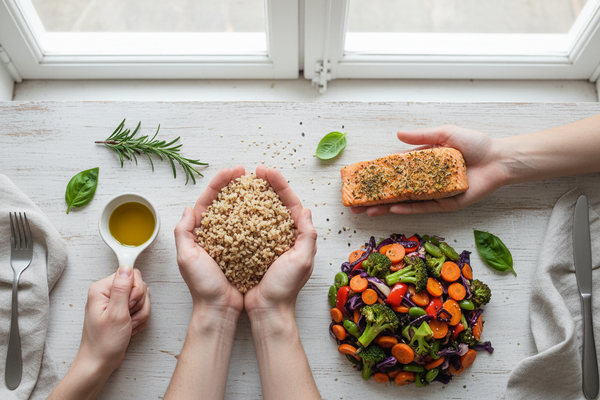
- A protein that's either fast or already cooked, so rotisserie-style chicken, batch-cooked beef, fish, eggs, or beans.
- A base that comes together quickly, like rice, pasta, potatoes, tortillas, or a big salad.
- Vegetables that take basically no skill, whether that's a bag of frozen, a sheet pan, or just raw and chopped.
Mix and match those three categories and you've suddenly got dozens of different dinners out of a small handful of components. Pick five or six combinations your family will reliably actually eat, and just rotate them. Boring-and-on-the-table beats ambitious-and-never-made every time. And for families wrangling kids' schedules alongside a teen who trains, solving the weeknight family dinner in Rancho Cucamonga gets into the activity-calendar version of all this.
Batch the parts, not always whole meals
Here's a piece of good news: you don't actually have to cook entire dinners in advance. A lot of the time it's plenty just to prep the components that take the longest. Cook off a few pounds of protein, roast a big tray of vegetables, and make a pot of rice or some other grain on a day you happen to have a little time. Then weeknight dinner becomes assembly rather than cooking, and that's the whole difference between fifteen minutes and a full hour.
Now, if batch cooking on a weekend feels like one more chore piled onto an already-full weekend, that's a completely fair complaint, and it's worth being honest about rather than pretending otherwise. The system that actually works is the one you'll actually do, full stop. For a gentler starting point, how to start meal prepping lays out a realistic beginner version that doesn't ask you to surrender your entire Sunday.
Who this is for (and an honest caveat)
Let me be straight with you. If you genuinely enjoy cooking and you've got the bandwidth most nights, then none of this is really a problem you need solved, and a loose weekly plan is plenty for you. No notes.
This is written for the families where the calendar is genuinely overloaded, where weeknights are a flat-out sprint, and where "just cook more" simply isn't realistic advice, because the time and the energy it assumes aren't there to be found. For those families, the honest answer is to remove cooking from as many weeknights as you can, whether that looks like heavy batching, a well-stocked freezer, or outsourcing some nights entirely. There's no prize handed out for cooking from scratch while you're exhausted. The actual prize is a real meal on the table and a calmer evening for everyone in the house.
Where prepared meals fit
When the weeknight time crunch is the real obstacle, ready-to-eat meals solve it pretty directly: dinner becomes a two-minute reheat, already portioned and balanced, with no decision to agonize over and no cleanup waiting on the other side. It's the no-cook default that genuinely beats the drive-thru on the hardest nights.
That's why families all across Southern California lean on a local kitchen like My Healthy Penguin for the nights that would otherwise collapse into chaos. Meals arrive cooked and labeled, with the Standard plan built around balanced everyday eating. You don't have to use it every single night, either. You just have to have a better default than the drive-thru for the nights the plan falls apart.
FAQ
What are the fastest healthy weeknight dinners?
Anything built from pre-cooked or genuinely fast components: batch-cooked protein, plus a quick base like rice or a salad, plus frozen or raw vegetables. These assembly dinners come together in ten to fifteen minutes simply because all the slow parts are already done before you walk in the door.
How do I stop the nightly "what's for dinner" stress?
Move the decision off the 6 p.m. clock entirely. Plan the week's dinners in advance, even loosely, so the tired version of you is executing a plan instead of trying to invent one on the spot. Decision fatigue is the real enemy here, and planning ahead is what removes it.
Is it cheaper to cook every night than to order meals?
Cooking from scratch is usually the cheapest route if you've got the time and you don't waste food. But the honest comparison also includes the value of your time and the cost of the takeout you end up ordering on the nights cooking just doesn't happen. For a lot of families, a mix turns out to be the cheapest real-world option.
How do I get a real dinner on the table when I have zero energy?
Have a no-cook default ready and waiting, whether that's a stocked freezer, batch-cooked components, or ready-to-eat meals. The nights your energy is completely gone are exactly the nights a plan that requires cooking is going to fail, so the plan for those specific nights should require none at all.
The bottom line
The 6 p.m. scramble is a systems problem, not a willpower or skill problem, and it gets solved by moving the hard decisions earlier in the day and removing cooking from your hardest nights. Plan before you're tired, batch the slow components, rotate a small set of reliable dinners, and keep a no-cook default ready for when it all falls apart anyway. Boring-and-on-the-table wins, every time.
For the nights that would otherwise end at the drive-thru, see what is on this week's menu. Every meal arrives cooked, portioned, and labeled, with no subscription required.
Written by the My Healthy Penguin kitchen team. Fresh meal prep made in Rancho Cucamonga, serving Southern California since 2015.
Dinner, already handled.
Fresh, macro-friendly meals delivered across Southern California.