How to Eat Healthy When You Live in Your Car or Truck
If you spend your days and nights in your vehicle, I want to start by naming the real problem, because most advice gets it wrong. The hardest part of eating well on the road was never temptation, and it was never about wanting it badly enough. It's infrastructure. You don't have a stove, you don't have a real fridge, you don't have a sink that works the way a kitchen sink works, and you certainly don't have a counter to spread out on. Meanwhile, the food at most fuel stops is engineered to be cheap, shelf-stable, and salty, because that's what sells and survives on a shelf. So when someone cheerfully tells you to "just cook at home" or "meal prep on Sunday," they're quietly assuming a home and a Sunday you simply don't have.
So let's do the version that actually meets you where you are. We'll walk through what to keep on hand, how to keep it cold enough to be safe, and how to put together genuinely real meals when your entire kitchen is a 12-volt cooler and a flat spot on the dash.
The honest answer: eat from a cooler, not the fuel counter
Here's the single highest-leverage move if you live and work in your vehicle: carry your own protein and produce in a 12-volt cooler or a quality ice chest, and treat those fuel-stop shelves as a backup plan rather than your main grocery store. The way to think about it is two anchors. You've got a cold zone for perishable protein, dairy, and produce, and a shelf-stable zone for the days the cold runs out or you can't restock anywhere decent.
Most of the time, you want to build your meals out of that cold zone first, because that's honestly where the real nutrition lives. Aim for some protein at every meal, something with fiber sitting next to it, and water instead of yet another energy drink. That's it. That one simple pattern, repeated day after day, will do more for you than any single "healthy" thing you could grab off a shelf in a moment of good intentions. Everything below is really just about making that pattern survivable on a real route.
Cold-zone staples (what to keep in the cooler)
If you're out for long stretches, a powered 12-volt cooler is genuinely worth the money, because it holds a safe temperature without you having to make a daily ice run. If you're working with a regular ice chest instead, plan to refresh your ice or freeze packs roughly every day or two, and keep your raw items up out of the meltwater.
Here are the cold-zone foods that need zero cooking and earn their space:
- Pre-cooked or ready-to-eat protein: rotisserie chicken portions, hard-boiled eggs, deli turkey, pre-cooked grilled chicken strips, cooked shrimp.
- Dairy and dairy-style protein: Greek yogurt, cottage cheese, string cheese, single-serve milk or kefir.
- Sturdy produce: baby carrots, snap peas, bell peppers, cherry tomatoes, grapes, apples, oranges, pre-washed greens.
- Heat-and-eat meals that come already portioned, so you're reheating rather than assembling anything.
The whole trick here is buying things that survive a cooler and don't ask you for a cutting board. Whole fruit, pre-portioned protein, anything you can eat straight from the container, that's the stuff that actually gets eaten on a hard day. The things that need washing, chopping, or cooking? Be honest with yourself, those usually don't.
Shelf-stable staples (for when the cold runs out)
You'll want a backup bin so that one bad restock day doesn't quietly turn into three meals of gas-station nachos. None of this needs refrigeration, which is exactly the point:
- Protein: tuna and salmon pouches, jerky or biltong, roasted edamame, canned chicken, single-serve nut butters, protein bars with a short ingredient list.
- Carbs with fiber: instant oats, whole-grain crackers, dry-roasted chickpeas, popcorn, whole-grain tortillas.
- Produce that travels: apples, oranges, bananas (good for a day or two), dried fruit in moderation, freeze-dried veggies.
- Mix-ins: olive oil packets, mustard, hot sauce, salt-free seasoning, so the same staples don't taste identical by day five.
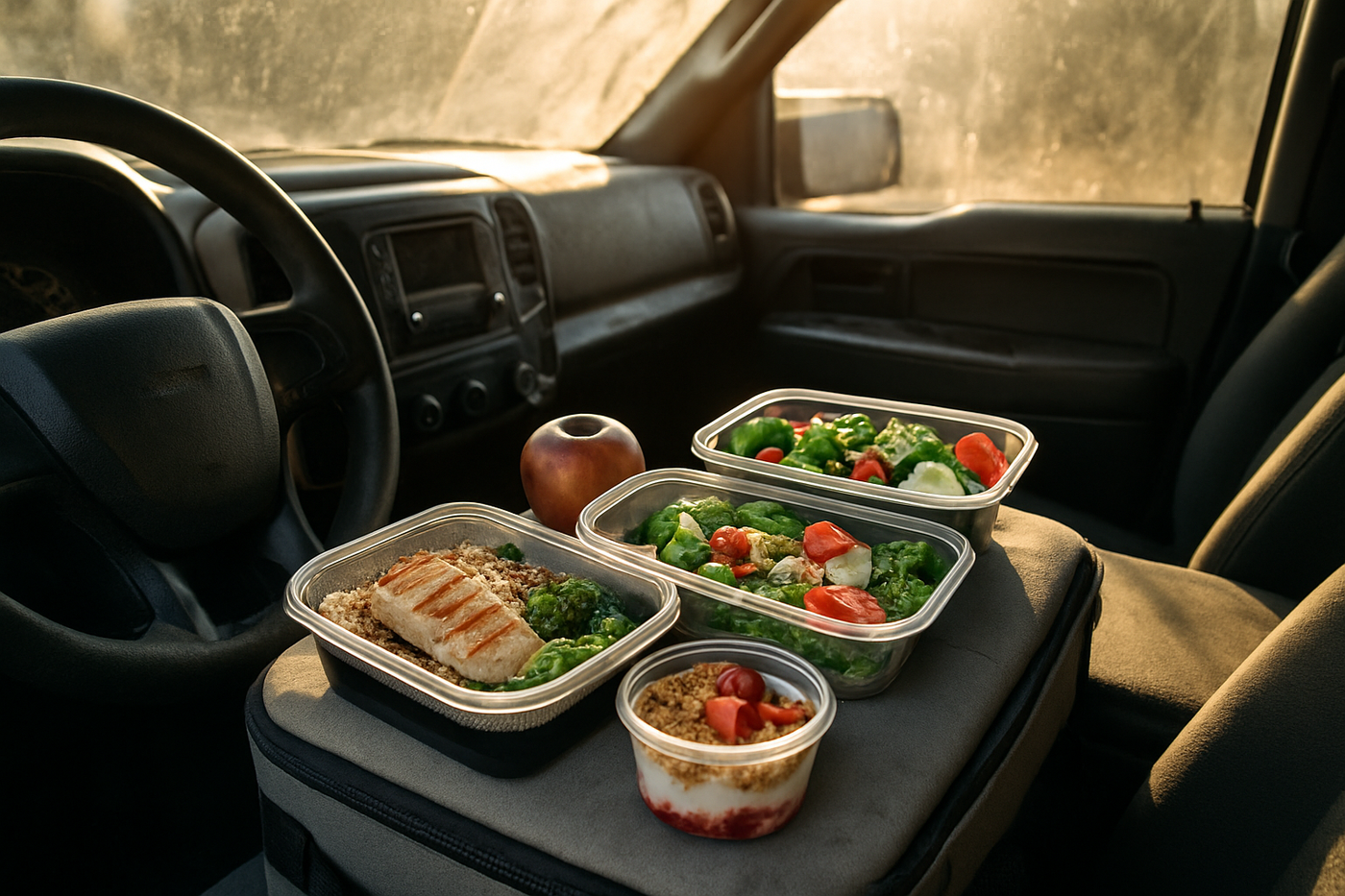
A pouch of tuna on whole-grain crackers with an apple on the side is a genuinely balanced meal you can put together on your lap. That's the bar we're aiming for. Not gourmet, just real.
How to build a no-cook day that actually fuels you
Here's what a normal day looks like when it holds up without a kitchen and lands you on protein, fiber, and steady energy instead of that sugar-and-caffeine rollercoaster you know too well:
| Meal | Example | Why it works |
|---|---|---|
| Morning | Greek yogurt + a handful of nuts + an orange | Protein and fiber that don't crash you at 10 a.m. |
| Midday | Tuna pouch on whole-grain crackers + bell pepper strips | Lean protein, no cooking, no cleanup |
| Afternoon | String cheese + an apple, or a ready-to-eat meal reheated | Stops the fuel-counter snack spiral |
| Evening | Pre-cooked chicken + a microwaved pouch of rice + baby carrots | A real dinner from the cooler, minimal effort |
If you happen to have access to a microwave at a truck stop, or a 12-volt one in the cab, a pre-portioned heat-and-eat meal turns "dinner" into about a two-minute job. And that matters more than it might sound, because the evening is exactly when road eating tends to fall apart and the drive-thru wins the night by default.
The food-safety part nobody mentions
Living out of a cooler means you have to think about temperature in a way your home fridge used to quietly handle for you. Keep your cold food at or below 40°F. Don't let cooked or perishable food sit in the danger zone, which is roughly 40°F to 140°F, for more than about two hours, and in a hot cab in the middle of summer, closer to one. When you're genuinely in doubt, just toss it. A skipped meal is annoying, sure, but a foodborne illness while you're out on a route is dangerous, and it's not worth the gamble. If you want to go deeper here, our guide to how long prepared meals really last covers fridge life and reheating, and honestly most of it applies just as well to a well-run cooler.
Who this works for, and who needs more
If you're parked near stores most nights and can restock often, you can lean heavily on the fresh cold-zone food and barely touch the shelf-stable bin at all. If you're running long hauls through stretches where there's genuinely nothing for miles, then that shelf-stable backup is what carries you, and you just accept that those days are about "good enough" rather than perfect. Both of those are completely fine. The goal here is consistency across a whole week, not a flawless single day. You'll see the same logic show up in fueling a job that's on its feet all day, where portability and calories matter a lot more than fussy optimization. And on the nights you do have a microwave, having a healthier default already sitting there beats the lit-up sign at the off-ramp, which is the whole idea behind reaching for something other than takeout.
FAQ
What's the healthiest thing to buy at a truck stop?
Look toward the cooler, not the candy aisle. Hard-boiled eggs, string cheese, Greek yogurt, milk, whole fruit, and jerky are usually available and need no prep at all. If you're buying something packaged, scan it for protein and fiber and try to keep the added sugar low. A protein-forward option will hold you far longer than chips and an energy drink ever will.
How do I keep food cold without a real fridge?
A 12-volt powered cooler is your most reliable option for long stretches, since it holds a safe temperature on its own without any babysitting. If you're using a regular ice chest, lean on frozen gel packs, keep that lid closed as much as you can, refresh the ice every day or two, and keep raw items sealed and up out of the meltwater. Either way, keep your cold food at or below 40°F.
Can I really eat enough protein without cooking?
You can, genuinely. Greek yogurt, cottage cheese, hard-boiled eggs, tuna and salmon pouches, jerky, pre-cooked chicken, and protein bars will get most people to their target with zero cooking involved. The whole point out on the road is to remove the cooking step entirely, not to win some willpower contest with yourself.
What if I only have a microwave?
A microwave opens things up a lot. Pre-portioned heat-and-eat meals, microwaveable rice and grain pouches, steam-in-bag vegetables, and oatmeal all suddenly become easy. That's often the whole difference between a real dinner and another bag from the off-ramp.
The bottom line
You really don't need a kitchen to eat well in a vehicle. What you need is a cold zone for your protein and produce, a shelf-stable backup for the lean days, and the habit of building meals from your own cooler instead of the fuel counter. Hit protein and fiber at most meals, keep it cold and keep it safe, and the consistency takes care of the rest on its own.
If your route happens to bring you through Southern California and you'd rather load up a cooler with meals that are already cooked, portioned, and labeled with macros, see what's on this week's menu. No subscription, just real food ready to grab and go.
Written by the My Healthy Penguin kitchen team. Fresh meal prep made in Rancho Cucamonga, serving Southern California since 2015.
Dinner, already handled.
Fresh, macro-friendly meals delivered across Southern California.