How Long Do Prepared Meals Really Last? A Food-Safety Guide
You know the moment. There is a container sitting in the back of your fridge, you are pretty sure it is dinner, and you genuinely cannot remember whether you cooked it Sunday or last Wednesday. So you stand there holding it, doing that little risk calculation in your head, and the answer you usually land on is some version of "when in doubt, throw it out." Which is fine, but it is also kind of a shrug, and it costs you a lot of perfectly good food over time.
Here is the thing though. This question has real, clear-cut answers. There are actual numbers behind food safety, and once you know them, that container in the back of the fridge stops being a guessing game. You waste less, you stress less, and you stop gambling your Tuesday night on a hunch. So let me walk you through the practical version: how long cooked meals keep in the fridge, when it is time to freeze, and how to reheat without taking any chances.
How long do prepared meals last in the fridge?
For most cooked meals stored properly in a sealed container, the safe window is 3 to 4 days in the refrigerator. That is the standard food-safety guideline for cooked proteins, grains, and most prepared dishes, and it assumes a couple of things are true: that your fridge is sitting at 40 degrees Fahrenheit or below, and that the food got cooled down and refrigerated reasonably soon after it was cooked.
Now, some foods run a little shorter and some stretch a little longer, but if you want one number to live by, 3 to 4 days is it. So if a meal has been in there since last weekend and it is now Thursday, you are past the window, and I would let it go even if it looks and smells completely fine. That last part trips people up, so it is worth saying plainly: the spoilage bacteria you can actually smell are not the same as the bacteria that make you sick, and the dangerous ones often leave no warning at all.
If you remember just one rule, make it this one. Cook by the weekend, eat by midweek, and freeze the rest. That single habit keeps you safe without forcing you to agonize over any individual container.
Why the 3-to-4-day rule exists
The clock is not arbitrary, and I think it helps to know why. Cooked food sitting in your fridge is not frozen in time, it is just slowed down. Bacteria are still multiplying in there, only much more slowly at cold temperatures. After about four days, though, the count can quietly climb high enough to become a real problem, even when the food has not visibly changed one bit.
Two things really decide how fast that happens.
- How quickly it got cold. Food that sat out on the counter cooling for a couple of hours before it made it into the fridge has already handed bacteria a head start. The danger zone is between 40 and 140 degrees Fahrenheit, and you want your food moving through that range fast, not lingering in it.
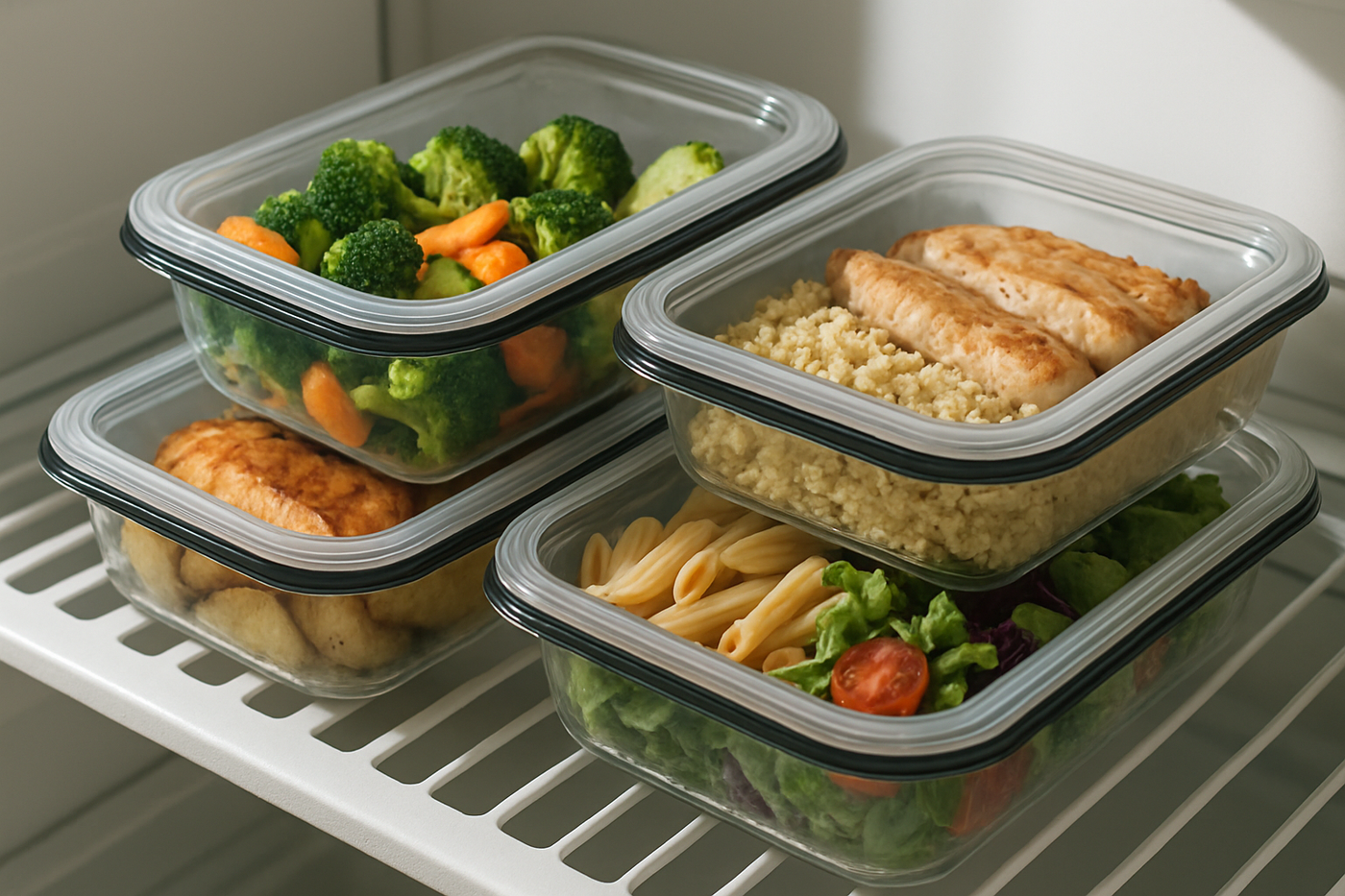
- How well it is sealed. Air, moisture, and repeatedly opening the lid all speed up spoilage. An airtight container holds the line a lot longer than something loosely covered with a stretch of plastic wrap.
This is also, by the way, why professionally prepared meals often last well, even the fresh ones. A real kitchen cools food rapidly and seals it immediately, which is honestly hard to replicate at home when you are tired and the chicken is just sort of cooling on the stove. It is also part of why local delivery and national shipping age differently, since a meal that spends days in transit arrives with fewer days left on its window than one made nearby.
A simple storage timeline
Here is a cheat sheet you can more or less keep in your head for the most common meal-prep foods.
| Food | Fridge (40°F) | Freezer (0°F) |
|---|---|---|
| Cooked chicken, beef, pork | 3 to 4 days | 2 to 3 months |
| Cooked fish and seafood | 3 days | 2 to 3 months |
| Cooked rice, pasta, grains | 3 to 4 days | 1 to 2 months |
| Soups and stews | 3 to 4 days | 2 to 3 months |
| Cooked vegetables | 3 to 5 days | 2 to 3 months |
| Most fully prepared meals | 3 to 4 days | 2 to 3 months |
One thing worth understanding about those freezer numbers: they are about quality, not safety. Food frozen at a steady 0 degrees stays safe more or less indefinitely, but the texture and flavor start to slide after the windows above, especially with fish and anything saucy. So the freezer dates are less "this is dangerous now" and more "this is past its best."
When to freeze and how to do it right
If you already know you are not going to get to a meal within that fridge window, freeze it early, not on day four. Freezing a meal on the same day you cooked it locks in the most quality and gives you the longest safe life on the other end. This is one of the first habits worth building if you are new to meal prepping, because it quietly turns a single Sunday cook session into two weeks of food instead of just four days.
A few small rules make a big difference in whether those frozen meals are actually worth eating later.
- Freeze it fresh, not tired. Day one or two beats day four every time. The idea is to preserve good food, not to rescue something already on its way out.
- Portion before freezing. Single servings thaw faster, and you only have to defrost exactly what you plan to eat.
- Squeeze out the air. Less air means less freezer burn, so airtight containers or bags pressed flat are your friends here.
- Label with the date. Trust me, frozen food all looks identical in two months. A strip of tape and a marker saves you the guessing game later.
And when it is time to thaw, do it in the fridge overnight rather than out on the counter. Counter thawing leaves the outside of the food sitting in the danger zone while the middle is still frozen solid, which is exactly the situation you are trying to avoid.
How to reheat safely
Reheating is not just about getting your food warm, it is about killing anything that might have grown during storage. So heat your leftovers all the way through to 165 degrees Fahrenheit, steaming hot in the middle, not just warm around the edges. If you are using a microwave, give it a stir halfway through, since microwaves heat unevenly and love to leave cold pockets right where bacteria can survive.
A couple of small habits round this out. Reheat only the portion you are actually going to eat, because repeatedly cooling and reheating the same container shortens its life and beats up the food. And once a meal has been reheated, go ahead and eat it. Do not cool it back down and stash it for tomorrow.
FAQ
Can I eat a prepared meal a day or two past the date on the label?
It is a risk, and honestly not one I would take. The 3-to-4-day window already builds in a small safety buffer, so pushing past it means gambling on bacteria you cannot see, smell, or taste. If you keep finding meals past their window, the better fix is to freeze earlier next time rather than to roll the dice.
Do fresh prepared meals last longer than ones I cook at home?
Often slightly, yes, because commercial kitchens cool and seal food faster than a home cook realistically can, which slows bacterial growth right from the start. Even so, I would treat the printed use-by date as your limit and follow the same 3-to-4-day logic once you have opened the package.
Is it safe to refreeze a meal I already thawed?
If it thawed in the fridge and still has time left on its window, you can refreeze it, though the texture will take a hit. If it thawed on the counter or sat out warm for a while, do not refreeze it. Either way, the quality you lose usually is not worth the trouble.
How can I tell if a meal has gone bad?
Off smells, sliminess, mold, or a sour taste are all clear signs to toss it, but here is the catch: the dangerous bacteria often leave no signs at all. That is exactly why the date-based rule matters more than the sniff test. When in doubt, trust the calendar over your nose.
The bottom line
Most prepared meals are safe in the fridge for 3 to 4 days and in the freezer for a couple of months, and that really is most of what you need to know. Cool your food fast, seal it tight, freeze early when you know you will not get to it, and reheat all the way to steaming. Follow the calendar instead of the sniff test, and you will waste less food while never having to gamble on a questionable container again.
If you would rather skip the guesswork entirely, every My Healthy Penguin meal arrives sealed and labeled with its date, ready to refrigerate or freeze. No subscription required.
Written by the My Healthy Penguin kitchen team. Fresh meal prep made in Rancho Cucamonga, serving Southern California since 2015.
Dinner, already handled.
Fresh, macro-friendly meals delivered across Southern California.