How to Eat Well When Food Prices Keep Climbing
The idea that healthy food is automatically expensive is about half true, and it's the false half that ends up costing people the most. Sure, some "health" foods carry a premium that buys you basically nothing but nice packaging. But here's the thing most budget advice skips right past: the cheapest calories per gram of actual nutrition are usually the plainest, most unglamorous foods in the whole store. Beans, eggs, oats, frozen vegetables, a whole chicken. The expensive part of eating well is rarely the healthy food itself. It's the waste, the impulse buys, and the takeout that quietly fills the gap whenever nothing's prepped.
So instead of handing you yet another list of coupons, I want to show you where the money actually leaks out, and how to plug those leaks without eating any worse than you do now. Once you see it this way, the whole problem starts to feel a lot more manageable.
What is the cheapest way to eat healthy?
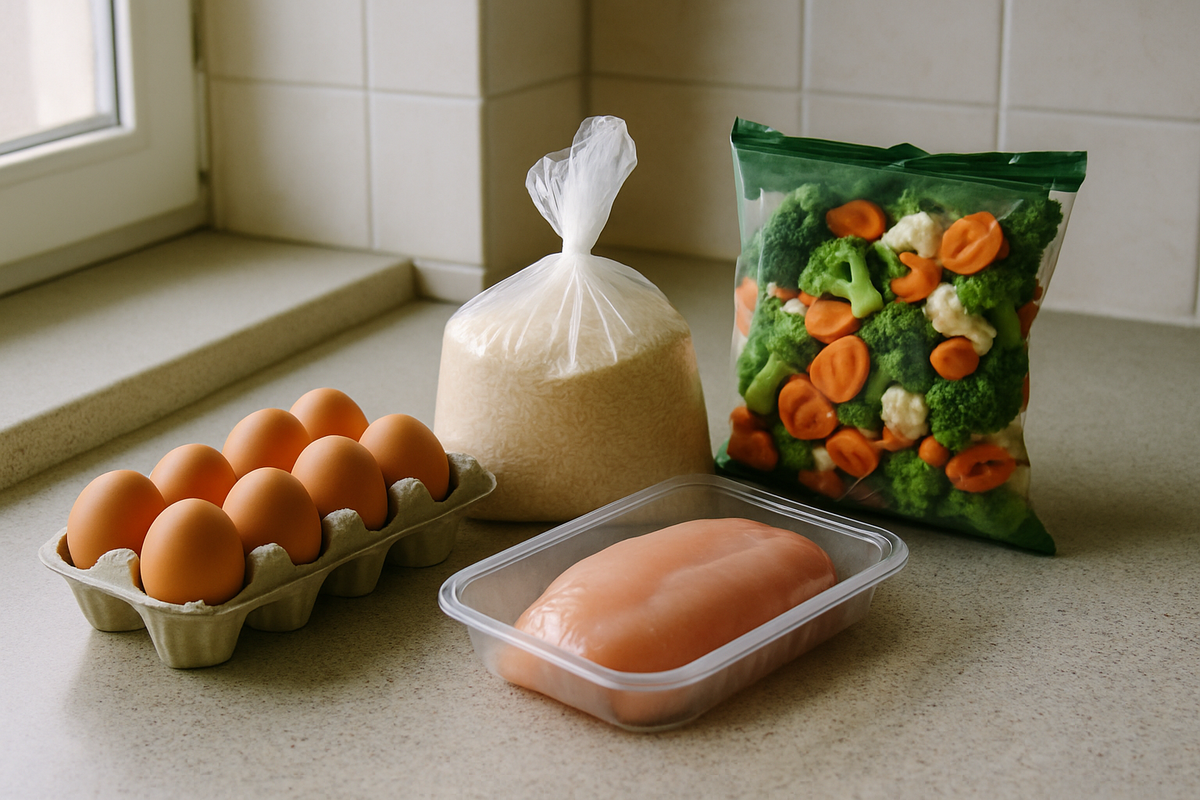
Let me give you the honest core of it. The cheapest healthy eating is built on whole, basic staples like beans, lentils, eggs, oats, rice, frozen and in-season vegetables, and cheaper proteins like chicken thighs or canned fish, all bought to a plan so that very little of it ever gets thrown away. The single biggest cost driver for most households isn't the price of good food at all. It's buying food that rots in the drawer and then ordering takeout to replace it. Fix the waste, get a handle on the impulse problem, and your budget loosens up almost immediately, before you've cut a single thing you actually like to eat.
That reframe really matters, because most "eat healthy on a budget" advice obsesses endlessly over per-item prices while completely ignoring the two places real money disappears: the produce drawer you sheepishly clean out at the end of the week, and the forty-dollar delivery order you placed because dinner just wasn't handled.
Where does grocery money actually leak?
There are three big leaks, and honestly, naming them out loud is already half the fix.
- Food waste. The average household throws away a meaningful share of all the food it buys. Every wasted bag of spinach is money you spent on absolutely nothing, and worse, it quietly nudges you toward "ah, I'll just order something instead."
- Impulse and convenience buys. Snacks, single-serve packs, the stuff that somehow jumps into the cart without you deciding it should. That convenience packaging carries a steep markup for the very same food you could buy plain.
- Takeout backfill. This is the quiet giant of the three. When the fridge has no plan behind it, a single delivery order can cost as much as several days of home-cooked meals. And the math gets genuinely brutal once you total up a whole month of it.
Notice that not one of these is the price of broccoli. They're system failures, every one of them, and the good news about system failures is that systems can be fixed.
The cost-per-meal reframe
Per-pound prices honestly trick you. What actually matters is the cost per real meal that gets eaten, after waste is accounted for. A cheap food you throw half of away isn't cheap at all. A slightly pricier food you finish down to the last bite might quietly win the comparison.
| Building block | Rough cost per serving | Protein / value note |
|---|---|---|
| Dried lentils or beans | Very low | High protein and fiber, almost no waste |
| Eggs | Low | Complete protein, long fridge life |
| Chicken thighs (bulk) | Low | More forgiving and cheaper than breast |
| Canned tuna or sardines | Low | Shelf-stable, zero spoilage |
| Frozen vegetables | Low | No waste, picked at peak |
| Oats and rice | Very low | Bulk carbs, indefinite shelf life |
The pattern jumps right out at you. Cheap, durable staples that don't spoil are the backbone of the whole thing. Build most of your meals from this column and your grocery bill drops without your nutrition dropping along with it, which is exactly the trade you want.
A budget-eating system that actually holds
Here's the part I really want you to hear: you don't need more discipline so much as you need a routine that quietly removes the decisions for you.
- Plan a handful of repeatable meals. You genuinely do not need 21 unique meals a week. Five or six that you just rotate through is cheaper to shop for and produces a lot less waste.
- Shop the plan, not the store. A list built straight from your meals is the strongest defense there is against impulse buys. The store is designed to tempt you, so let the list do the deciding.
- Buy durable proteins and frozen vegetables. These forgive a chaotic week instead of rotting their way through it while you're busy.
- Cook once, eat several times. Batching a few staples on one day kills the weeknight takeout reflex, and that reflex is exactly where the budget really bleeds out.
- Count takeout as a grocery line. When you actually tally up a month of delivery, the true cost of "no plan" becomes painfully obvious, and that number is usually what makes the whole system feel worth doing.
Where prepared meals fit on a tight budget
Let me give you the honest version, because you deserve it. If you've got the time and energy to cook from staples, that's the cheapest path, full stop. No delivery service on earth beats dried beans and bulk chicken on raw price, and I'm not going to pretend otherwise.
But here's where it gets interesting. Cost per meal isn't the same thing as cost per dollar in the store. If your real spending pattern is good groceries that quietly spoil plus frequent takeout to cover the gap, then the relevant comparison isn't "staples versus delivery" at all. It's "my actual current spending versus a fixed, no-waste alternative." That's where the math gets genuinely worth running, and worth running honestly. We break down meal prep delivery vs groceries with the full cost math, and whether meal prep delivery is actually worth it for who it does and doesn't make sense for.
The whole point is to compare against what you really spend, takeout and waste included, not against some idealized version of your kitchen that just doesn't exist on a busy week.
FAQ
Is healthy food really more expensive?
The cheapest healthy staples, things like beans, eggs, oats, rice, frozen vegetables, and bulk chicken, are among the most affordable food in the entire store. What makes "healthy eating" feel expensive is usually premium specialty products plus waste and takeout, not the base ingredients themselves.
What are the cheapest high-protein foods?
Eggs, dried beans and lentils, canned tuna and sardines, and bulk cuts like chicken thighs all deliver a lot of protein per dollar. They also happen to be shelf-stable or long-lasting, so very little of what you buy ends up going to waste.
How do I stop wasting so much food?
Plan a small rotation of repeatable meals, shop only to that list, and lean on frozen vegetables and durable proteins that survive a chaotic week. Most waste comes from buying fresh food with no concrete plan for actually using it, so the plan is the cure.
Is takeout really that big a cost?
Usually bigger than people realize, honestly. One delivery order can cost as much as several days of home-cooked meals. Tallying up a full month of takeout is very often the exact moment the budget math finally becomes obvious.
Are frozen vegetables less healthy than fresh?
No, and this one trips a lot of people up. Frozen vegetables are picked and frozen at peak ripeness, they retain their nutrients well, and they produce almost no waste. For budget eating, they're frequently the smarter choice, not the compromise.
The bottom line
Eating well on a budget is less about hunting for cheaper ingredients and more about plugging the leaks: food waste, impulse buys, and the takeout you order whenever nothing's prepped. Build your meals from durable staples, shop to a plan, cook once and eat several times, and compare any alternative against what you truly spend, takeout very much included. The healthy food, it turns out, was rarely the expensive part to begin with.
If takeout and food waste are quietly inflating your food budget, see what's on this week's menu: fixed-price meals, portioned, with the macros listed and nothing left to spoil. No subscription required.
Written by the My Healthy Penguin kitchen team. Fresh meal prep made in Rancho Cucamonga, serving Southern California since 2015.
Dinner, already handled.
Fresh, macro-friendly meals delivered across Southern California.