Why Breakfast Is Where Most People Lose the Protein Battle
Do me a quick favor and picture your usual breakfast, then count the protein in it. If it's cereal, there's almost none. Toast and jam? None to speak of. A bagel gets you a few grams if you're lucky. Oatmeal, maybe five. And a muffin with a latte is, if we're being honest with each other, basically dessert before work. For most people, breakfast quietly turns out to be the single weakest protein meal of the entire day, and because it sets the tone for everything that follows, it ends up dragging the whole daily total down with it.
Here's the good news, though. This is very fixable, and it doesn't mean choking down a plain chicken breast at seven in the morning. The whole trick is to stop treating breakfast as a carb event where protein is optional, and start anchoring it with protein the same way you'd never think twice about doing at dinner. Let me walk you through how.
Why does breakfast wreck your protein total?
Here's the heart of the problem. The default breakfast foods in America, things like cereal, toast, pastries, bagels, granola, and most smoothies, are mostly carbohydrate, so a typical breakfast lands somewhere around 5 to 10 grams of protein when it really should be closer to 30. And when you miss 25 grams first thing in the morning, you spend the rest of the day quietly playing catch-up, usually by loading up dinner, which just doesn't work as well as spreading your protein out across the day.
There's another reason breakfast is the usual weak spot, and it's worth naming. Breakfast is the meal most of us eat on total autopilot. Lunch and dinner get at least a little thought, but breakfast is whatever's fast and familiar and doesn't require a decision. The thing is, that's actually great news, because it means breakfast is also the easiest meal to fix. Change one default and you bank 20-plus grams of protein before the day even gets busy. If you want the full picture on what your targets should be, here's how much protein you actually need per day.
What counts as a high-protein breakfast?
A genuinely useful target here is roughly 30 grams of protein at breakfast. That's around the amount that meaningfully helps with muscle, and just as importantly in real life, it's enough to keep you full so the mid-morning snack attack never shows up. Here's what 30 grams actually looks like once you put it in real food:
| Breakfast | Approx. protein |
|---|---|
| 3 eggs | ~18 g |
| 1 cup Greek yogurt (plain, nonfat) | ~22 g |
| 1 cup cottage cheese | ~24 g |
| 2 eggs + 1 cup Greek yogurt | ~35 g |
| Protein shake (1 scoop) + 1 cup milk | ~35 g |
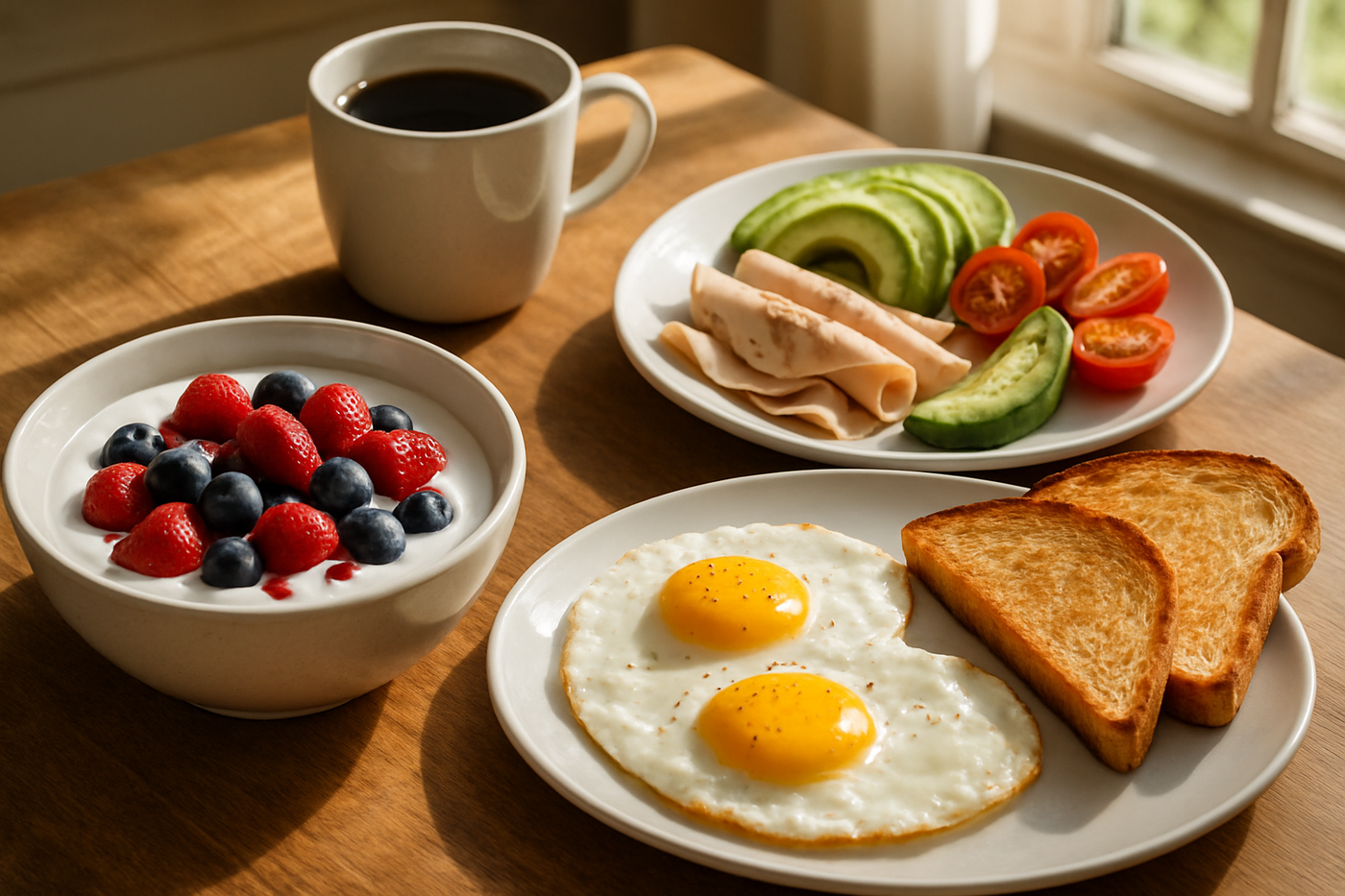
| 3 eggs + 2 slices turkey or chicken sausage | ~30 g |
Notice that not one of these asks you to follow a recipe. The pattern underneath them is dead simple: pick one or two protein anchors and build the rest of the meal around them, instead of building around the carb and just hoping a little protein wanders in alongside it.
Fast high-protein breakfasts for people who have no time
Here's something worth sitting with: most breakfast failures aren't knowledge failures, they're time failures. You usually know what you should eat. You just don't have ten free minutes at 7 a.m. So let me sort these by how little effort they actually ask of you.
Zero cooking: - Greek yogurt with berries and a spoonful of nut butter - Cottage cheese with fruit, or with tomato and a little pepper if you lean savory - A protein shake blended with milk and frozen fruit - Overnight oats made with Greek yogurt or a scoop of protein powder - Hard-boiled eggs made ahead, a few at a time, so they're just waiting for you
Five minutes of cooking: - Scrambled or fried eggs with a side of yogurt to nudge the protein past 30 grams - An egg-and-turkey roll-up you can eat with one hand - Eggs cooked once and reheated across the week
Zero effort at all: - A ready-to-eat breakfast that's already portioned with the protein cooked in, for the mornings when cooking is simply not going to happen
And if even the easy version tends to fall apart on your busiest days, I want to be clear that's a logistics problem, not a discipline problem. It's the exact same issue I get into in eating enough protein when you don't have time to cook.
The honest part: you do not have to eat breakfast at all
Let me be straight with you, because I think this gets lost in a lot of breakfast advice. If you skip breakfast on purpose and you feel genuinely fine, you don't need to force it down. Hitting your daily protein total is what actually matters, and some people honestly do better eating in a shorter window. The point of this whole article was never "you must eat breakfast." It's "if you're going to eat breakfast, please stop making it the protein hole in your day."
The real trap, the thing I'd actually warn you about, is the accidental skip. That's grabbing a pastry because it happened to be sitting there, or going coffee-only because you ran out of time, and then wondering why you're starving and snacky by 10:30. That's not a real choice you made. That's a default quietly failing you. So either eat a real, protein-anchored breakfast, or skip on purpose and own it. It's that accidental middle ground that gives you the worst of both worlds.
This is general nutrition information, by the way, not medical or dietary advice for any specific condition.
FAQ
How much protein should breakfast have?
Around 30 grams is a good target for most adults. That's roughly the amount that helps with muscle, and just as practically, it keeps you full through the morning so you're not raiding the snack drawer by 10:30. Hitting it at breakfast also makes your whole daily total far easier to reach.
What is the highest-protein breakfast that needs no cooking?
Greek yogurt and cottage cheese are your workhorses here, at roughly 22 to 24 grams per cup. Combine either one with eggs or a scoop of protein powder and you clear 30 grams without ever turning on the stove.
Is oatmeal a high-protein breakfast?
On its own, not really. Plain oatmeal is mostly carbohydrate, with only around 5 grams of protein per serving. It turns into a solid breakfast the moment you make it with milk, stir in Greek yogurt or protein powder, or just pair it with a couple of eggs on the side.
Are protein bars and shakes okay for breakfast?
Yes, absolutely, especially when the honest alternative is a pastry or nothing at all. A shake with milk or a quality bar can deliver 20 to 30 grams fast. Just glance at the label to make sure the protein number is real and the added sugar isn't sky-high.
Should I eat breakfast if I am trying to lose weight?
Not necessarily, and you can let that pressure go. What matters is your daily intake, not whether you specifically eat in the morning. That said, if you do eat breakfast, a protein-forward one helps with fullness and tends to quiet down the snacking later in the day.
The bottom line
Breakfast is where most people quietly lose the protein battle, simply because the default foods are nearly all carbs. Aim for about 30 grams, anchor the meal with eggs, Greek yogurt, cottage cheese, or a shake, and then either eat it on purpose or skip it on purpose. Fix this one meal and your whole day's protein gets dramatically easier, almost without you noticing.
Mornings too rushed to cook? See what's on this week's menu, where every meal lists its macros so you know exactly what you're getting. No subscription required.
Written by the My Healthy Penguin kitchen team. Fresh meal prep made in Rancho Cucamonga, serving Southern California since 2015.
Dinner, already handled.
Fresh, macro-friendly meals delivered across Southern California.