Decision Fatigue Is Ruining Your Diet: Here's the Fix (2026)
Decision Fatigue Is Ruining Your Diet: Here's How to Fix It Without Trying Harder
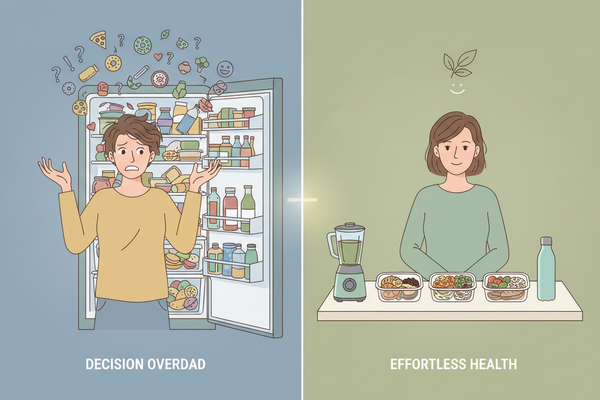
There's a reason that by 7pm on a Wednesday, the baked chicken you planned to make sounds completely unappealing and the pizza place's number seems to dial itself.
It's not that you don't care about your health. It's that your brain has literally spent its decision-making capacity for the day. This is called decision fatigue, it's a well-documented phenomenon, and it explains a huge amount of why intelligent, motivated people consistently make food choices they later regret.
Understanding this changes the approach entirely.
What Decision Fatigue Actually Is
Every decision you make throughout the day draws on a finite cognitive resource. What to wear. How to respond to that email. What to say in the meeting. What to prioritize this afternoon. How to handle the situation with your kid's school. Small decisions, big decisions, they all draw from the same pool.
By the end of a full day, that pool is significantly depleted. And depleted decision-making capacity produces specific patterns:
You default to the familiar and easy. The drive-through is familiar and easy.
You're more susceptible to impulse. The pizza your roommate or spouse mentions sounds great suddenly.
You avoid effortful choices. "Figuring out dinner" becomes genuinely hard in a way it wouldn't be at 10am.
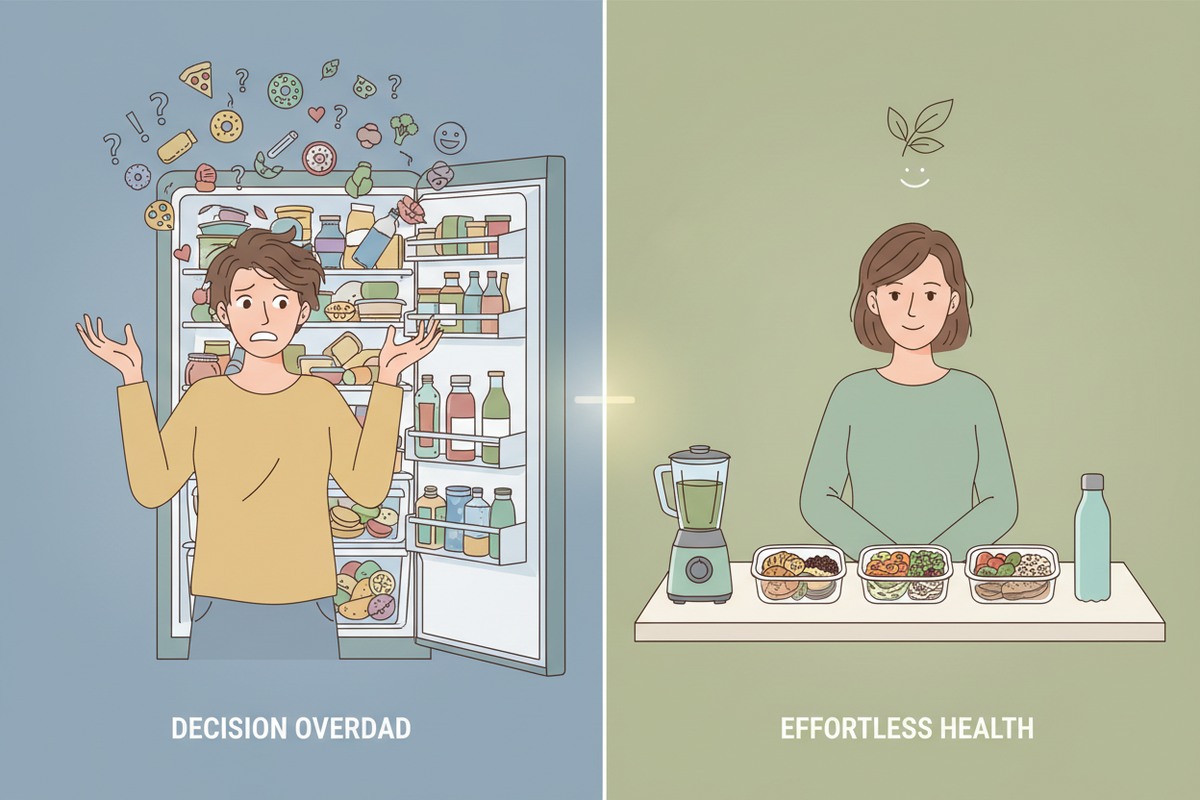
The irony is that the moment when you most need to make a good food choice, at the end of a hard day when your nutrition actually matters, is exactly the moment when your capacity to make that choice is at its lowest.
Why "Trying Harder" Doesn't Help
The standard response to this problem is some version of "just be more disciplined." Make better choices. Stick to the plan.
But discipline requires decision-making capacity. If the capacity is depleted, more discipline doesn't help. You can't willpower your way through a resource you don't have.
What actually works is removing the decision from the depleted moment entirely.
If there's a good meal already in your fridge that requires zero decision-making to access, the question isn't "what should I make for dinner?" It's "do I want the chicken or the beef?" That's a much smaller cognitive lift. And it produces a completely different outcome.
The System That Actually Works
Here's what low-friction healthy eating looks like in practice:
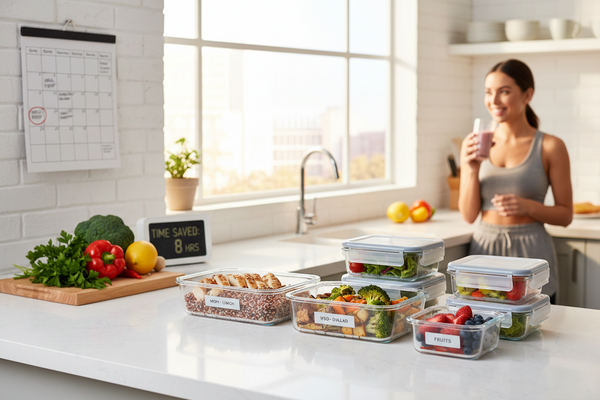
You decide, once, early in the week or before the week starts, what you're going to eat. You make that decision when you have cognitive capacity. Then the decision is made and you don't have to remake it at 7pm every night.
Whether that decision-making takes the form of meal prepping your own food on Sunday or ordering meal prep delivery that shows up at your door, the structural effect is the same. The good food is there. The decision was made earlier. The tired you at the end of the day just eats what's there.
Where My Healthy Penguin Comes In
My Healthy Penguin delivers fresh, ready-to-eat meals to your door throughout Southern California. The meal decision is made when you order, which can happen at any time during the week when you have capacity for it. Then the food arrives and it's there.
The tired you at 7pm on Wednesday doesn't have to figure anything out. Just open the fridge, pick one, heat it up.
This is not a hack. It's just a better system than one that requires peak decision-making capacity at the moment of lowest cognitive resources.
Our founder Christine Holyfield built My Healthy Penguin around the idea that healthy eating needs to work in real life, not just in ideal conditions. Addressing decision fatigue is very much part of that. The food is there when you need it. You just eat it.
No subscription, because the system should be flexible. Order the weeks when the structure helps, skip the weeks when life is different. Visit myhealthypenguin.com to see this week's menu.
FAQ
How does ordering once a week prevent decision fatigue? You make the food decision when you have energy, either when ordering online or when you're planning your week. Then when you're tired at the end of the day, the decision is already made. You just eat what's in the fridge.
Is this just an excuse to not cook? It's not about excuses. It's about building a system that works with human psychology rather than against it. If cooking works well for you, great. If you're repeatedly failing to eat well at the end of exhausting days, the system needs adjustment.
Is there a subscription? No. Order week by week.
Does this work for any kind of nutrition goal? Yes. Whether you're managing weight, building muscle, or just trying to eat consistently better, the meals are designed to support those goals.
---
Stop fighting your tired evening brain and start working with it. Check this week's menu at My Healthy Penguin and remove some decisions from your day.
---
Dinner, already handled.
Fresh, macro-friendly meals delivered across Southern California.